
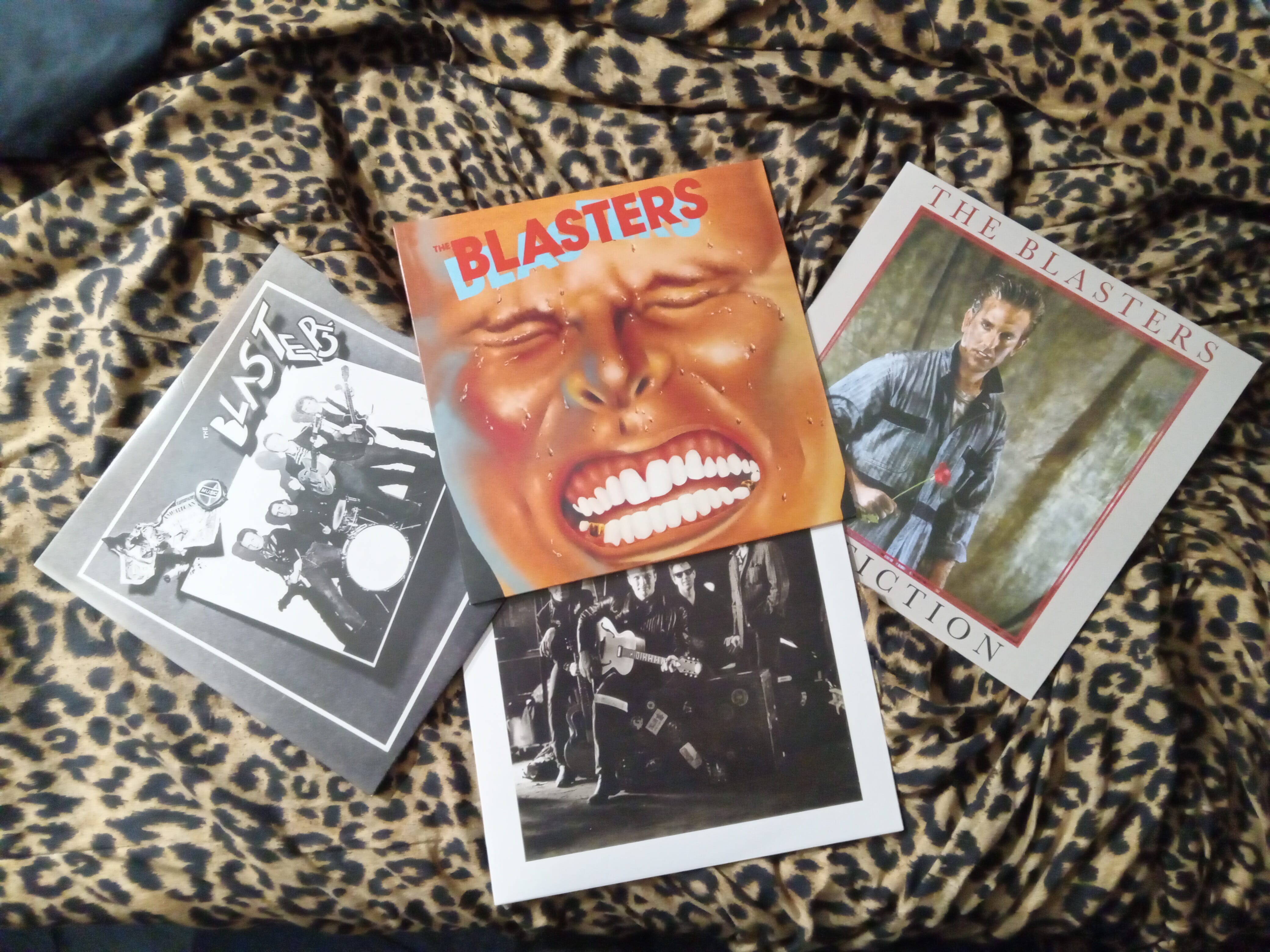
Wait’ll I show you my lithographs! [Pic: Tim Stegall]
THE BLASTERS — American Music (Liberation Hall) LP
THE BLASTERS — The Blasters (Liberation Hall) LP
THE BLASTERS — Non Fiction (Liberation Hall) LP
THE BLASTERS — Hard Line (Liberation Hall) LP
“I had this epiphany on 7th Street in Long Beach on a 95-degree day, stuck in traffic with no air conditioning with the windows rolled down,” Dave Alvin recalled to writer Chris Morris of the moment his name was suddenly scrawled in all-caps on rock ‘n’ roll history. It’s in the liner notes to Liberation Hall’s fresh reissues of the original Blasters’ four LP catalog, partly compiled and fully annotated by Morris for last year’s Record Store Day exclusive box set, The Blasters: An American Music Story, now available as separate LPs, CDs, and streaming albums.
“‘Hey, what if you can sound like Elmore James’ band The Broom Dusters?” Alvin continued. “(What if you can) sound like Chuck Berry’s band, but their lyrics would be…what Raymond Chandler (would) write? Or what a young Hemingway (would) write? What Eudora Welty (would) write, if they were all in a blues band?”
This was the moment The Blasters transcended the white blues bores and country bar musicians they knew in their native Downey, California, and even obliterated L.A.’s neo-rockabilly scene currently lorded over by Levi and The Rockats, though they wanted to break in there. This was the moment Alvin, then simply their lead guitarist and co-band leader with older brother Phil, became the West Coast’s best rock ‘n’ roll songwriter.
Dave, Phil on hog-callin’ vocals and rhythm guitar, bassist John Bazz, and drummer Bill Bateman, burst outta Downey and attacked Hollywood, understanding the assignment without ever sounding like they were trying to pass a test. The rootsier outfits from their home area were trying too hard to be authentic. The Hollywood ‘billies were too busy comparing mascara application tips. Everybody else was either chasing speed — the faster, louder, more nihilistic hardcore scene — or retreating into irony and synthesizers like they were building little art-school fallout shelters. The Blasters kicked open the door with a stack of 45s older than most of their audience.
The source material wasn’t just rockabilly. The Alvins, Bazz and Bateman equally understood R&B, Gulf Coast grease, Freddie King licks and Howlin’ Wolf stomp. But they played that stuff with the urgency of what they were seeing at The Masque: X, Screamers, Germs, The Zeros, The Dickies, The Eyes, and The Weirdos. They played like the ghosts in those scratchy 45s were still breathing down their necks.
The secret was that their original songs were even better than the guys they emulated. Like Lou Reed, or X’s John Doe and Exene, Dave Alvin figured out how to write entire 2:30/three-chord novels, in the vernacular of Willie Dixon or Hank Williams. All because of sweatin’ in that Long Beach traffic jam that afternoon. Now we get to hear the pure products of that ignition point through Liberation Hall’s fresh reissues of the original Blasters’ four LP catalog.
They’d convinced Rockin’ Ronny Weiser — the one-man rockabilly cheering squad running Rollin’ Rock Records out of his garage — to take a chance on them, after his Sparkletts delivery man showed enthusiasm for their demo while restocking Weiser’s water cooler. But then he asked a dangerous question, after seeing The Blasters play a shitload of covers at a Redondo Beach bar: “Do you have any originals?”
After lying that they didn’t have time to play their originals that night, Dave apparently chimed from the back of the van heading back to Downey that each Blaster needed to write two songs and bring them into the next band practice. As Bateman puts it in Morris’ liners to the Rollin’ Rock record’s reissue, Dave sat at the kitchen table the following morning as his mother cooked breakfast and wrote “American Music” and “Marie Marie,” “because he had to.”
Amidst a pile of covers, ranging from Bill Haley (”Real Rock Drive”) to a definitive take on Billy Boy Arnold’s “I Wish You Would” that makes The Yardbirds’ rendition cower in fear, “American Music” and “Marie Marie” transcend Weiser’s garage recording set-up and flat non-production and serve notice. The band was a major talent, especially their budding songwriter. From that point, those two songs served as The Blasters’ eternal manifesto.
So, while American Music was just a straight documentary tape dump, it still translated their feral live energy and Dave Alvin’s prodigious compositional smarts enough that Queen requested they open a four-night stint for them at the Inglewood Forum. Meanwhile, “Marie Marie” caught Welsh Elvis-a-like Shakin’ Stevens’ ear, resulting in a stream of foreign royalty checks hitting Dave’s mailbox as Shakey’s recording rose to No. 19 on the UK singles charts. Among the blitzkrieg of Blasters shows played through ‘80 and ‘81 was a night with X at the San Diego Lions Club that forevermore bonded both bands, eventually leading to Slash Records signing The Blasters.
The band insisted on producing themselves. Slash booked them into Hollywood’s United Western Recorders, where The Beach Boys cut Pet Sounds, Ricky Nelson made many of his classics such as “Poor Little Fool” and “Hello Mary Lou,” and Hanna-Barbera recorded the voices for The Flintstones. The distance traveled from American Music to The Blasters is immediately obvious with the opening re-recording of “Marie Marie”: Bateman’s drums slam, the ambience sounds less like a spring reverb unit plugged into the mixing desk and more like the band playing in a big room. The overall production is more three-dimensional. This is the difference between being in a professional recording studio and setting up the Fender Twin next to Ronny Weiser’s Sparkletts water cooler.
Everything about The Blasters was an improvement. This was not the dreaded “sophomore jinx” in effect! This WAS The Blasters’ debut album! “American Music” was also resuscitated at United Western, joining a tracklist heavier on Dave Alvin originals than last time, though the few covers present were impeccable, including Jimmie Rodgers’ “Never No More Blues” done Sun Records style and a definitive take on Little Willie John’s “I’m Shakin’.” The latter especially benefitted from the full firepower of the newly expanded Blasters lineup: boogie woogie piano genius Gene Taylor and hornsmen Steve Berlin (also a subscriber to The ‘Stack!) and the legendary Lee Allen joining the core band. But when Dave is writing songs as fully killer as “Border Radio” and the hot-sheets tango “Hollywood Bed,” there’s no more need to stripmine those old 45s for your repertoire.
There were even fewer covers on 1983’s Non Fiction, including Junior Parker’s “Barefoot Rock,” which also featured on American Music. The Blasters moved into Ocean Way Recording with a bigger budget and a bracing clutch of Dave’s best three-chord short stories, such as “Red Rose” and his tale of Hank Williams’ final night on Earth, “Long White Cadillac.” Dwight Yoakam later had a sizable country hit with that. However, though the band produced themselves again, the results were not as full-blooded as last time. Dave later described Non Fiction as “murky sounding.” They no longer sound like a band playing in a room. The reverb sounds like digital delay, and the drums occasionally sound like they were gated and compressed for FM radio play. Reportedly, the brotherly dynamic between Dave and Phil was feeling more like Don and Phil (Everly, that is), and it almost feels palpable here. But for all Non Fiction’s shortcomings — and it’s not the record that The Blasters was — this contains some of Dave’s finest songs yet.
But nobody was bargaining on the damned record company interfering.
Shortly after the first Slash album was released, major labels came sniffing around The Blasters. Dave Alvin, wanting to learn from Warner Bros.’ legendarily artist-friendly A&R man Lenny Waronker how to become an even better songwriter, ventured a compromise: have WEA partner with Slash, giving the indie better distribution and an influx of cash, and Slash could protect The Blasters from notes reading, “We don’t hear any hits.” Though Phil, the band’s manager, and seemingly everyone he knew argued against it (Phil more vehemently than anyone), this was the deal they accepted, and it worked…until it didn’t.
According to Dave’s chapter in John Doe’s second LA punk anthology More Fun In The New World, it began with the ever-bickering Blasters getting banned from meetings with Waronker, except for Dave. And he began steering his songs further into discussing “hard times, missed opportunities, fading hopes, and everyone’s favorite lighthearted topic, death,” looking to “John Steinbeck, Nelson Algren, and Woody Guthrie,” as well as the “picket-line songs” his union-organizer dad sang around the Alvin household. And everything was hunky dory, until Waronker began expressing discomfort about The Blasters’ sales, which he legendarily never subjected Randy Newman or Van Dyke Parks to.
So now, The Blasters were told they needed an outside producer. After a stormy process that included Warners A&R rejecting Booker T. Jones as too old(!!), they settled on Jeff Eyrich, a fellow Downeyite who’d attended the same high school as the Alvins and just had success with The Plimsouls’ amazing “A Million Miles Away.” And it all was working, with Dave varying the stylistic remit to include country (“Little Honey,” originally done by his folkie side-project with Doe and Exene, The Knitters) and gospel (an arrangement of the traditional “Samson And Delilah”). Eyrich even brought in extra instrumentalists that made sense, including Elvis’ old backing vocal group The Jordanaires!
Then, as Dave played what he thought was a finished album for the A&R department gathered in Waronker’s office, a new team member piped up that a song Dave was particularly proud of, “Kathleen,” sounded “too much like The Blasters.” To which a barely-composed Dave replied, “Maybe that’s because we are The Blasters.”
“No one laughed,” he wrote. Even worse, Waronker uttered the dreaded words he never expected: “We don’t hear a single. Go back into the studio and come out with a hit record.”
So, three songs, including “Kathleen,” get dumped. And then John Cougar Mellencamp, the sawn-off Indiana sub-Springsteen whose American heartland rock was the more acceptable side of ‘80s mainstream music, called Blasters manager Shelly Heber. He’d written a song for them, “Colored Lights,” and he wanted to produce it with his recording cohort Don Gehman. His goal? “Get The Blasters a damn hit record!”
Well, “Colored Lights” is good. But it didn’t sound like The Blasters. Nor did the second track they recorded with Gehman deputizing, after Mellencamp returned home, “Just Another Sunday.” They sounded like John Cougar Mellencamp songs sung by Phil Alvin. And “Colored Lights” didn’t become The Blasters’ “damn hit record,” and neither did the album, Hard Line, stalling at No. 86 on Billboard.
February 17, 1986, the Alvins bickered as Nick Lowe attempted to produce a new Dave song, “4th of July.” Phil did not like his brother describing the children setting off fireworks in the lyrics as “Mexican kids.” Dave walked out, sick of it, especially after the 1985 Hard Line tour had been so fraught, compounded by all the pressure from Warners to sound less like The Blasters. The original band was over, Dave stopping briefly to replace Billy Zoom in X, giving them “4th of July,” then moving on to become the best roadhouse singer/songwriter/guitar player ever, unto the present. Phil continues to lead some version of The Blasters, though it is currently on pause due to his delicate health.
What Liberation Hall’s reissues finally make plain, alongside Chris Morris’ beautiful annotation, is that The Blasters were never retro fetishists nor roots curators polishing glass cases of American music. They were punk-adjacent insurgents who understood that Chuck Berry and Howlin’ Wolf were live ammunition, with Dave Alvin’s literary songwriting as the trigger. From American Music’s garage ferocity to The Blasters’ studio muscle, through the murk and corporate sabotage of Non Fiction and Hard Line, this catalog documents a band fighting to keep American music dangerous. Remastered, even Hard Line reveals the gems buried beneath the heartland-rock varnish. These records don’t need rehabilitation. They need volume. And now, mercifully, they’ve got it again. Get them all.
[NOTE: This review originally ran in Ugly Things # 71, the Spring 2026 issue, available by clicking all this underlined crap.]
And while you’re buying those Blasters records, maybe you should also buy my book?
No, The Blasters are not in Anarchy In The Studio: Punk Music 1970-1979 — The Rise of Punk Rock, available now from Ruffian Books. But they most certainly will be in the planned follow-up on the ‘80s, once I start working on that. And while Dave Alvin hasn’t read Anarchy yet, writer Chris Morris, my adoptive father and the man who compiled those reissues, has. Or at least he’s read portions of it. Here’s what he had to say:
“I have called Tim Stegall ‘Sonny’ since the first days of our friendship, spawned some 35 years ago at the South By Southwest Music Conference. We have both written a lot about punk rock; I am of the older variety of rock journalist, and he is of the younger. We share a fondness for volume, attitude, intransigence, confrontation, resistance, and hot beauty. Our record collections are very much the same. (Well, I may own more jazz.) I’m sure anyone of any generation will learn something from this smart, involved, highly personal rundown of the classical era of punk rock. I will happily add this volume to the library stacks at Chateau Maurice. You make the old man proud, kid.”
Thanks, Pops! Be expecting your copy sometime this month! As for you, my dear readers? Click all this bold, underlined shit to order your copy of my first book. However, if you want a signed edition, personally sent by me from my own private stash? That can be arranged, too!

Order only the first edition hardback of Anarchy In The Studio, signed and personally inscribed by me for $100, including shipping and handling. Click that button below.
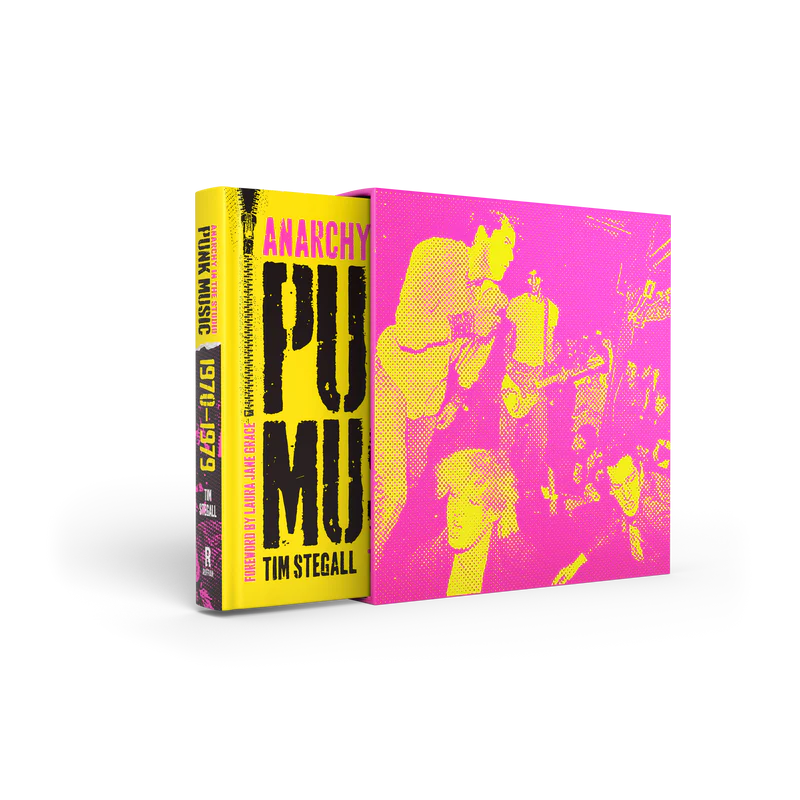
Order the Deluxe Edition of Anarchy In The Studio, with the first edition hardback and limited edition slipcase with photos of the Germs and The Weirdos, signed and personally inscribed by me for $134.80, including shipping and handling. Click that button below.
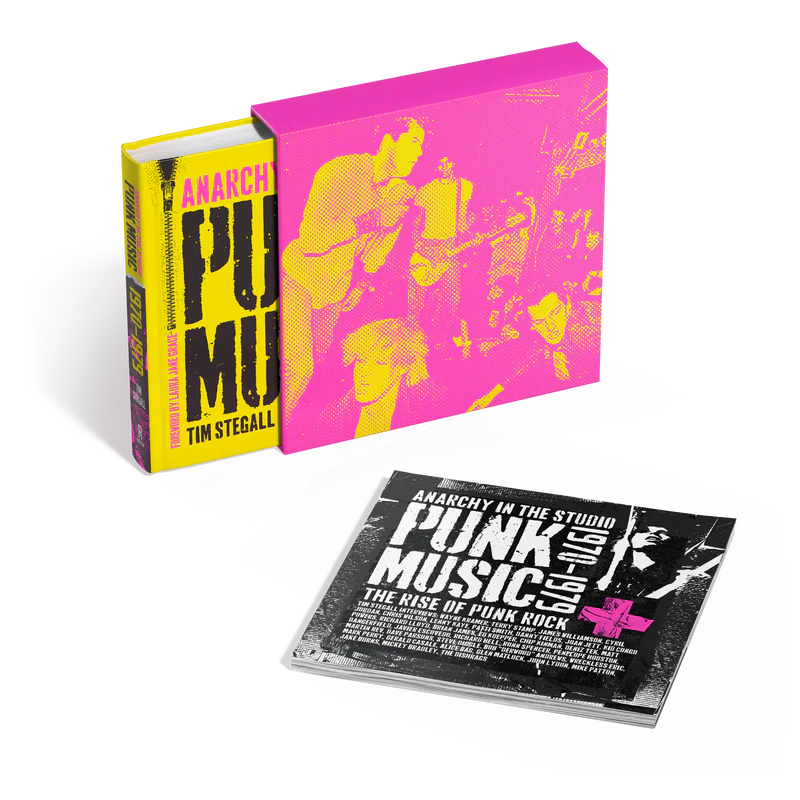
Order the Super Deluxe Edition of Anarchy In The Studio, with the first edition hardback, the limited edition slipcase with photos of the Germs and The Weirdos, and the bonus 165-page interview book, signed and personally inscribed by me for $161.50, including shipping and handling. Click that button below.
Remember: Anarchy will not be available in stores until the fall, and that will only be in select retailers. A mass-market edition will be out early next year. If you want a first edition, order from Ruffian. Also, in-stores will be few, so click those links to buy signed editions directly from me.
Also, I really appreciate all the new subscribers to The Tim “Napalm” Stegall Substack. Welcome! If you’re a casual reader who is impressed with my in-depth take on punk culture, it’s free to subscribe, or $7/month or $52/year to go paid, and every subscription helps me keep writing about the music I love. But I admit, I especially love the paid ones – those keep the lights on and pay for more makings for Chocolate Lava Mug Cake! Thanks for coming along for the ride.
#TheTimNapalmStegallSubstack #TimNapalmStegall #TheBlasters #DaveAlvin #PhilAlvin #BillBateman #JohnBazz #GeneTaylor #SteveBerlin #LeeAllen #AmericanMusic #NonFiction #HardLine #MarieMarie #BorderRadio #LongWhiteCadillac #LiberationHall #ChrisMorris #RecordStoreDay #AmericanRootsMusic #RootsRock #Rockabilly #RhythmAndBlues #Blues #RockNRoll #PunkRock #PunkHistory #LosAngelesPunk #TheMasque #XTheBand #TheGerms #TheWeirdos #TheZeros #Screamers #SlashRecords #MusicJournalism #MusicHistory #RockNRollWriting #IndependentMedia #DIYMedia #SupportIndependentMedia #GoPaidItKeepsTheWorkAlive #SubscribeAndSurvive #AnarchyInTheStudio #RuffianBooks #TheBestBandsNeverStoppedBeingDangerous #ChuckBerryStillHadAmmo #RaymondChandlerWithAGuitarAmp #DowneyBuiltSomethingBeautiful #AmericanMusicWasAlwaysPunk #RootsMusicWithSwitchblades #ThePastSoundsLouderWhenYouTurnItUp #DoYouReallyReadThisTediousShit #ScrewYouForMakingMeLearnSEO #ChocolateLavaMugCakeKeepsTheLightsOn
Hey mofo. I bought your book! Sign it for me if you’re mailing em out. Can’t wait to get it (well, I guess I can lol). Great stuff about Blasters. Dave Alvin man. Happy I’ve seen the Knitters and to hear they are touring again too. Last time I saw X for their 40th tour complete with a reinvigorated Billy I was amazed at how reinvigorated Exine was. She was on her feet and having a great time, in great voice. It was awesome. Can’t wait to catch the Knitters. They played Houston’s Continental Club last time and I’ll bet they do again.
Appreciation for the indepth reporting on the history of a Blasters. I feel edumacated now, where I was just a lazy fan before. Man, as you well know, trying to make a career in music is hard for even the most talented. But Dave Alvin sure can write a song. And that turns out to be more lucrative than the best playin’ so I’m sure Marie, Marie has been very good to him.
BTW What is “Shakin’” without horns? 🤷🏻♂️😻🙏🏻👍